

Does A Person's Personality Come More From Their Genetic Makeup Or More From Environmental Factors
Genes are units of genetic data that mostly contain a building programme for a single protein. They are made of a sequence of Dna, our genetic material, and they sit on the DNA molecule similar beads on a cord.
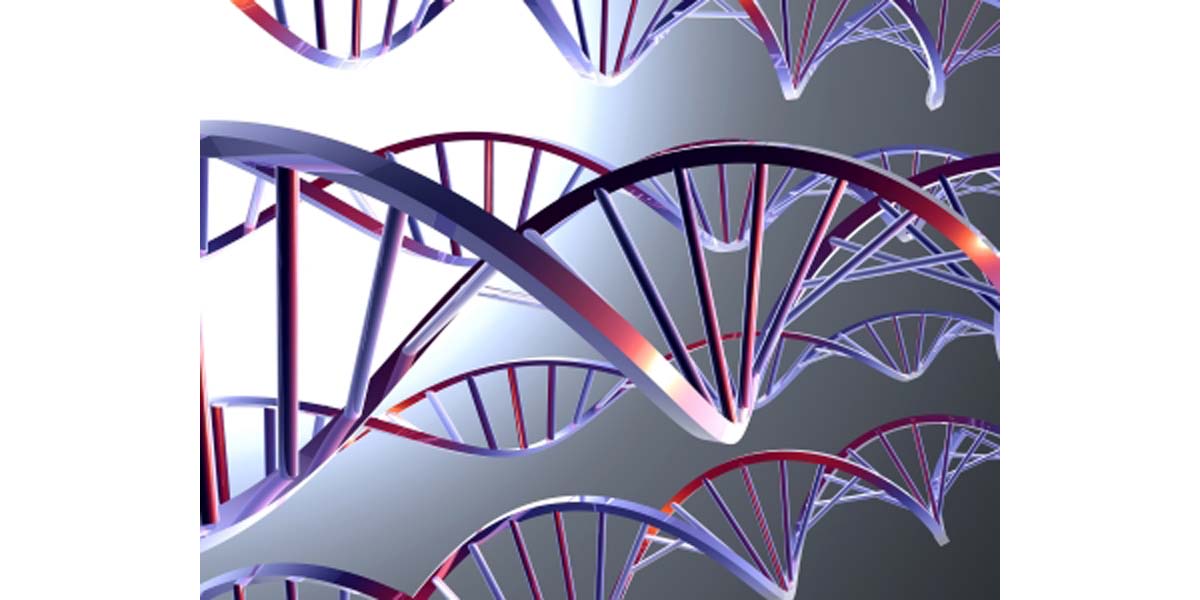
What are genes?
The entire genetic textile of an organism with a nucleus in its cells is distributed over several Dna molecules that are tightly packed with protecting proteins. These structures are called chromosomes. In that location are areas in the chromosomes that do non incorporate any genes. These are important for decision-making the expression of the genes and other functions.
How do genes work?
A gene contains the data necessary to build a specific protein. This information is stored in the sequence of the edifice blocks of the Dna molecule — and the four bases Adenosine, Cytosine, Guanine, and Thymine. These are abbreviated to A, C, G, and T. To build a protein co-ordinate to the instructions in the gene, an RNA-copy of the Dna is made and transported class the cell'due south nucleus to the primary cell body. Specific enzymes can read the data on the RNA and interpret it into the correct sequence of amino acids, which are the building blocks of proteins. There are about 20 different amino acids available and the data for one amino acid is independent in a sequence of three bases on the Dna.
How practise genes bear upon a person's behavior and personality?
How can a sequence of bases in the Deoxyribonucleic acid that encodes a sequence of amino acids perhaps have any influence over our behavior and personality? It's a common enough question, but the reply is so circuitous that more is notwithstanding existence discovered almost the ways in which our genes make up one's mind who we are all the fourth dimension. The step from the working of a single factor to such complex features every bit personality and behavior is huge. However, if genetic data can determine how such complicated features like the centre of vertebrate develop, it is not also fantastic to imagine that your genes tin besides influence personality and behavior.
How exactly this happens is to appointment not fully understood. All the same, there are correlations between the physical development of the encephalon dependent on, for example, gender that accept a strong influence on beliefs. The amount of expression of certain messenger molecules called neurotransmitters in the brain can also have a large touch on behavior and can fifty-fifty lead to such diseases equally low or schizophrenia.
The expression of neurotransmitters and likewise of receptors for them is controlled by the product of sure genes and it is hypothesized that genetic polymorphisms in the expression levels can predispose people to booze and drug addictions and other mental disorders. Personality traits are even more complex than predispositions for mental disorders and we are nevertheless at the beginning of the understanding of the ways in which genes tin influence your personality.
How can the heritability of personality traits and behavior be measured?
How do nosotros know at all that genes have an impact on personality and behavior? In other words, how is the heritability of personality and behavior measured? The contribution of genetics to behavior and personality in laboratory animals tin be measured fairly hands, since in this setting the convenance (genetics) and the environment are easily and strictly controlled.
For human studies, this kind of controlled environs is non possible to achieve. Researchers therefore resort to large and complicated family studies. Twin studies are very popular in this context. Some studies, for example, compare identical twin pairs that have been brought up separated class each other to the general population. Identical twins share all their genes, but the environs that they would have been influenced past as they grew up is different in this context. Other studies compare identical twins to fraternal twins who all share the same family unit environs, but the fraternal twins share only half of their genes. Looking at adoptive siblings, who share the family environment but no genes, compared to biological siblings who share one-half of their genes and the environment, tin as well be helpful.
In a meta-analysis of studies that looked at the Eysenck Personality Questionnaire (EPQ) dimensions (Neuroticism, Extraversion, and Psychoticism) it was found that the results for identical twins had a correlation of 0.468. A correlation of 1 would mean that the answers were 100% identical. Fraternal twins had only a correlation of 0.166, similar to other beginning-degree relatives who had a correlation of 0.150. Second-caste relatives had a correlation of 0.073 and adoptive family members had only 0.030. This shows that there is a definite genetic component to these personality traits, but environmental influences do also exist and exert an influence, otherwise the correlation between identical twin should exist very close to 1.
Read More: Turn On Cancer-Fighting Genes
What is the nature versus nurture debate?
"Nature vs. nurture" is the tag line for the age old question every bit to whether behavior and personality traits are most influenced past genetics ("nature"), or past the environs a person is exposed to ("nurture"). Almost scientists nowadays agree that to put this question this fashion is overly simplistic. Genetics might, for example, lead a certain person to seek a certain surroundings that then in plow influences the behavior and personality of this person. On the other mitt, environmental stimuli tin can influence the expression levels of certain genes, so that the environment can contribute to the influence genetics has on the private. This principle is best understood for genetic diseases that depending on the environment become apparent or non despite the fact that the private has the gene for this affliction.
But it also is true for personality traits and mental disorders. A person may, for example, exist genetically predisposed toward developing an alcohol corruption disorder, but growing up in an environment that encourages sobriety, never encounter the temptation of alcohol.
It is therefore not helpful to think that there is a strict segregation betwixt environmental influences and genetics. Rather, the two take a dynamic relationship in which each has an impact on the other.

Does A Person's Personality Come More From Their Genetic Makeup Or More From Environmental Factors,
Source: https://www.steadyhealth.com/articles/how-do-genetics-impact-behavior-and-personality
Posted by: landissclows1999.blogspot.com
0 Response to "Does A Person's Personality Come More From Their Genetic Makeup Or More From Environmental Factors"
Post a Comment